Posts

Charles Wesley

Image
Charles Wesley (1707-1788) was an English hymn writer and a co-founder of Methodism. He wrote over 6,500 hymns, including famous ones such as "Hark! The Herald Angels Sing," "Love Divine, All Loves Excelling," and "Christ the Lord is Risen Today." Along with his brother John Wesley, he played a significant role in the growth and development of the Methodist movement, which sought to bring renewal and revival to the Church of England. Charles Wesley's hymns remain popular today, both within and outside of the Methodist tradition, and continue to be an important part of Christian worship.

Pilate Stone

Image
Pilate Stone is a slab of stone inscribed with the name of Pontius Pilate, the Roman governor of Judaea who ordered the crucifixion of Jesus Christ. The stone, which was used as a cornerstone or building block, was discovered in 1961 and is now housed in the Israel Antiquities Authority in Jerusalem. It is considered an important artifact in the study of the historical events surrounding the trial and death of Jesus and is widely accepted as evidence of Pilate's existence.

James Ussher

Image
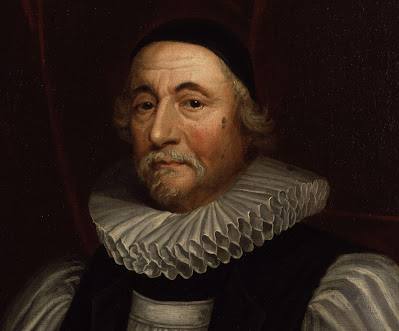
Bishop James Ussher (1581-1656) was an Irish Anglican bishop and scholar. Ussher is well known for having determined the date of the creation of the world to be 4004 BC using biblical genealogies and astronomical calculations. His calculations for Anno Mundi were widely accepted and influenced several works of biblical interpretation.  Ussher was born in Dublin in 1581. In 1594, at the age of fifteen, he went on to study at Trinity College Dublin. After being ordered as a bishop, Ussher began writing extensively on biblical history. Ussher's most famous contribution to biblical scholarship was a detailed biblical chronology that also included a calculation of the date of creation. This chronology was based on the study of the genealogical records documented in the Hebrew Bible. The development of methods such as radioisotope dating has since challenged Ussher's calculations based on genealogical records. 

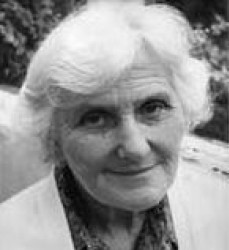
Patricia St. John

Image
Patricia St. John was a British Christian evangelist and author. She is best known for her children's books, which have been widely read and translated into many languages. She worked as a nurse and an evangelist in North Africa and later in England, where she wrote her first book "The Secret at Pype Hayes". She went on to write many more books that emphasized the importance of love, forgiveness, and trusting in God.

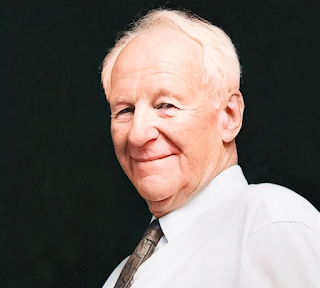
John Stott

Image
John Stott (1921-2011) was a British Anglican clergyman and theologian. He was known for his conservative Evangelical theology and his emphasis on social justice. He was the rector of All Souls Church, Langham Place in London for many years and was also the founder of the Langham Partnership International, an organization that supports theological education in developing countries. Stott was a popular speaker and author, writing many books including "Basic Christianity" and "The Cross of Christ." 

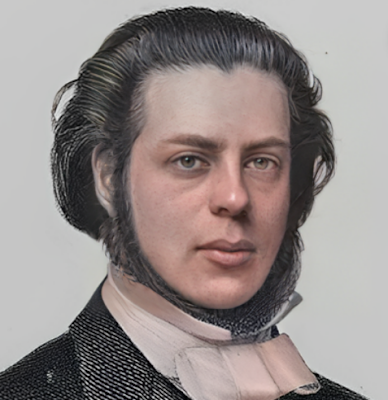
Henry Grattan Guinness

Image
Henry Grattan Guinness (1835-1899) was an Irish Protestant Christian pastor, evangelist and author. He was born in Dublin, Ireland and trained as an engineer before becoming a minister. He is best known for his work as a revivalist preacher and his contributions to the development of the Plymouth Brethren movement in Ireland. He preached extensively in the United Kingdom, Ireland and the United States, and was particularly known for his powerful sermons and his ability to draw large crowds. He also wrote several books on Christian theology and revivalism, including "The Approaching End of the Age" and "The Light of the Nations." Guinness died in Dublin in 1899, and his funeral was attended by thousands of people.

Logical Fallacies

Image
A logical fallacy is an error in reasoning that can occur in arguments. Here is a list of some common logical fallacies: Ad Hominem: This fallacy occurs when an argument is rejected on the basis of personal characteristics, rather than the merits of the argument itself.  Straw Man: This fallacy occurs when an argument is misrepresented in order to make it easier to attack or refute.  False Dilemma: This fallacy occurs when only two options are presented when there are actually more possibilities.  Appeal to Emotion: This fallacy occurs when an argument appeals to emotions rather than logic or evidence.  Appeal to Authority: This fallacy occurs when an argument is accepted because of the authority of the person making it, rather than the evidence or reasoning provided. False Cause: This fallacy occurs when a cause and effect relationship is assumed without evidence.  Begging the Question: This fallacy occurs when an argument assumes what it is trying to prove....